Save Time & Stress! How to Design a Low-Maintenance Pool for Your Backyard
A pool should give you more time to relax in your backyard — not less. Yet for many Melbourne homeowners, the ongoing upkeep of a poorly designed pool turns that dream into a weekend chore. The good news: most of what makes a pool high-maintenance is decided at the design stage. Get these decisions right upfront, and you'll spend far less time on chemicals, cleaning, and repairs for the life of the pool.
Start With the Right Pool Type
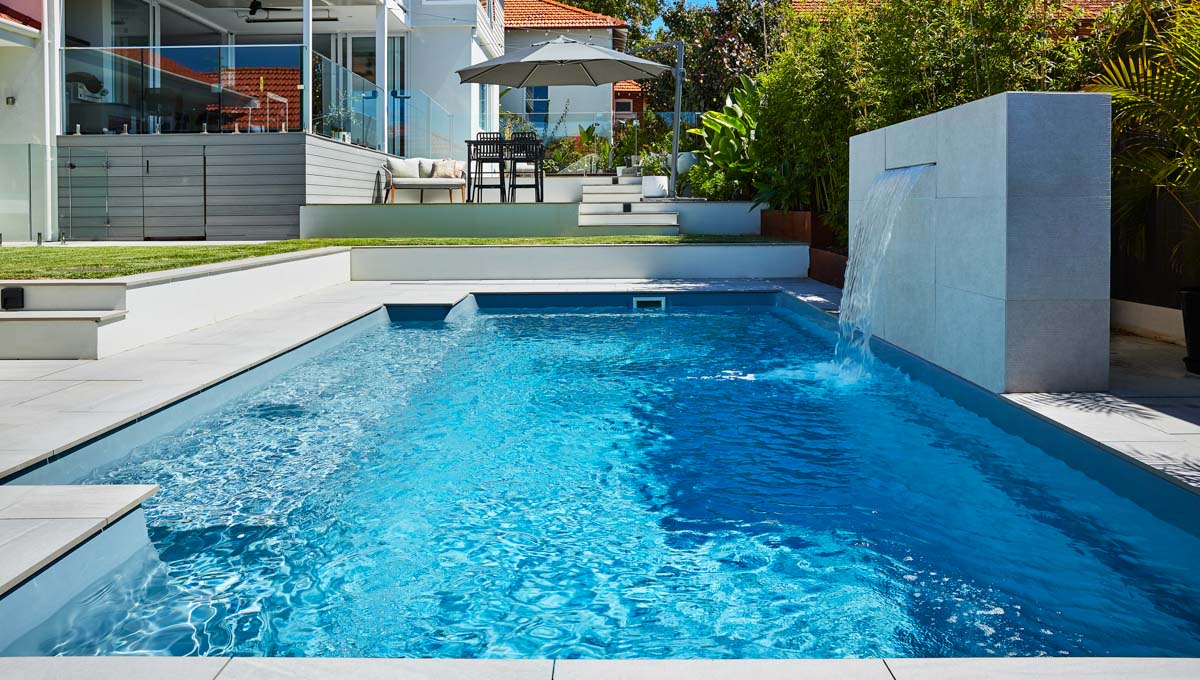
The single biggest driver of long-term pool maintenance is your choice of pool material. If reducing ongoing upkeep is a priority, fibreglass pools have a clear structural advantage over concrete. Their smooth, non-porous gelcoat surface actively resists algae growth — meaning fewer chemicals, less scrubbing, and lower chemical costs year after year.
Concrete pools, while offering unlimited design flexibility, have a porous surface that algae can penetrate. They typically require more brushing, higher chemical volumes to maintain water balance, and full interior resurfacing every 10–15 years. That's not a reason to avoid concrete — for a truly bespoke design, it remains the right call — but it's an honest trade-off to factor into your decision. Our full concrete pool guide covers what ongoing care looks like in practice.
Fibreglass Advantage
Non-porous gelcoat resists algae, uses up to 50% fewer chemicals, and never requires resurfacing. Barrier Reef pools carry Australia's only 5-Tick Standards certification.
Concrete Flexibility
Unlimited custom shapes, integrated spas and water features, and choice of tiled or quartzon interior. Higher maintenance trade-off for complete design freedom.
Choose a Shape That Works With You, Not Against You
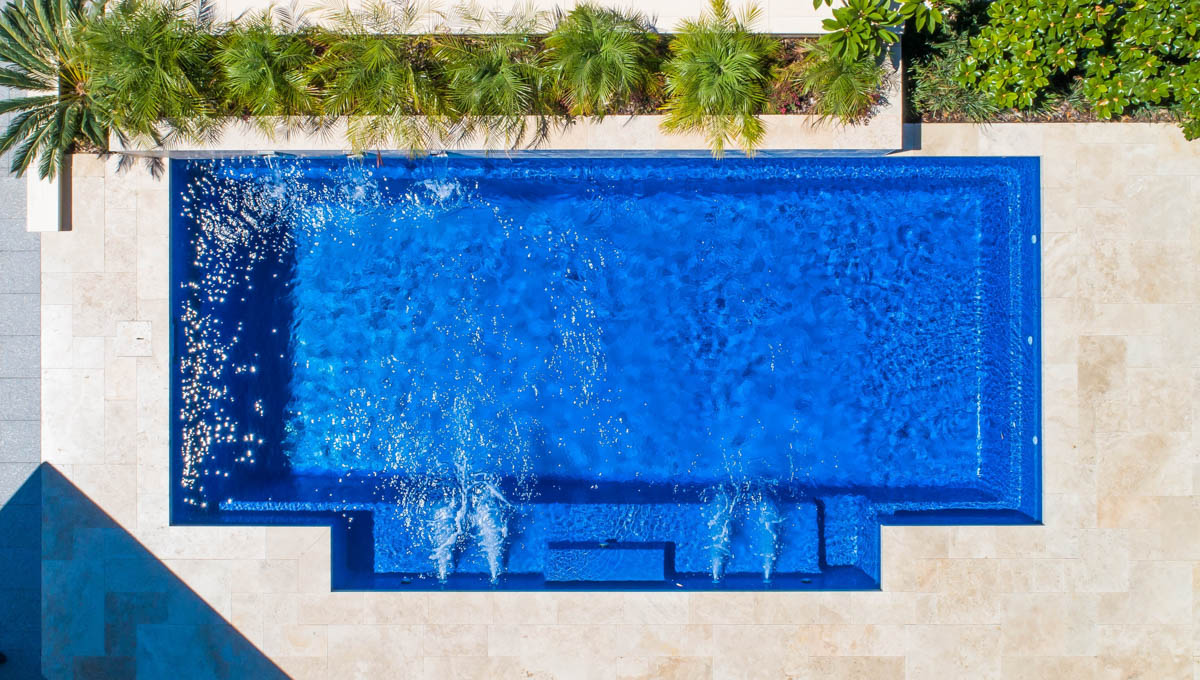
Pool shape has a direct impact on how easy your pool is to clean and circulate. Simpler forms — clean rectangles, ovals, and geometric shapes — allow water to circulate more efficiently through your filtration system, which means better water quality with less effort. They're also easier to clean manually or with an automatic cleaner, since there are fewer nooks, corners, and irregular edges for debris to settle in.
This doesn't mean you're limited to a boring rectangle. The Barrier Reef fibreglass range includes a wide variety of clean, contemporary shapes — from the elegant geometric Horizon and Majestic designs through to freeform options like the Kidney — all engineered with efficient water flow in mind. For compact backyards where a smaller footprint is non-negotiable, a plunge pool delivers the same enjoyment with even less upkeep volume.
Specify the Right Equipment From the Start
Pool equipment is where most of the heavy lifting on maintenance happens — and where most homeowners underinvest. Upgrading at build time costs a fraction of what retrofitting does later, and the right equipment makes the single biggest difference to how hands-off your pool actually is.
Variable-Speed Pump
Runs at lower speeds for routine filtration, cuts energy use by up to 80%, and extends equipment life. A non-negotiable upgrade for any pool owner focused on low running costs.
Salt Chlorinator
Eliminates the need to manually add chlorine. Converts dissolved salt into sanitiser automatically, maintaining consistent water quality with minimal intervention from you.
Robotic Cleaner
Automatically vacuums the pool floor and walls on a schedule you set. Pair with an in-floor cleaning system for fibreglass pools and your pool essentially cleans itself.
Pool Automation
Control filtration, heating, lighting, and chemical dosing from your phone. Automation systems catch issues early and let you manage your pool remotely — no guesswork required.
Upgrade at Build Time, Not After
Adding a variable-speed pump, salt chlorinator, or automation system during the build is significantly cheaper than retrofitting — both in parts and labour. Talk to Steve and Patrick about what's included as standard and what upgrades make sense for your usage patterns.
Design Your Surrounds to Work For You
The area around your pool contributes almost as much to ongoing maintenance as the pool itself. A few smart choices here can cut cleaning time significantly.
-
Minimise garden beds adjacent to the pool — leaf fall and mulch debris are the biggest source of pool contamination. Push gardens back from the pool edge or use hard landscaping instead.
-
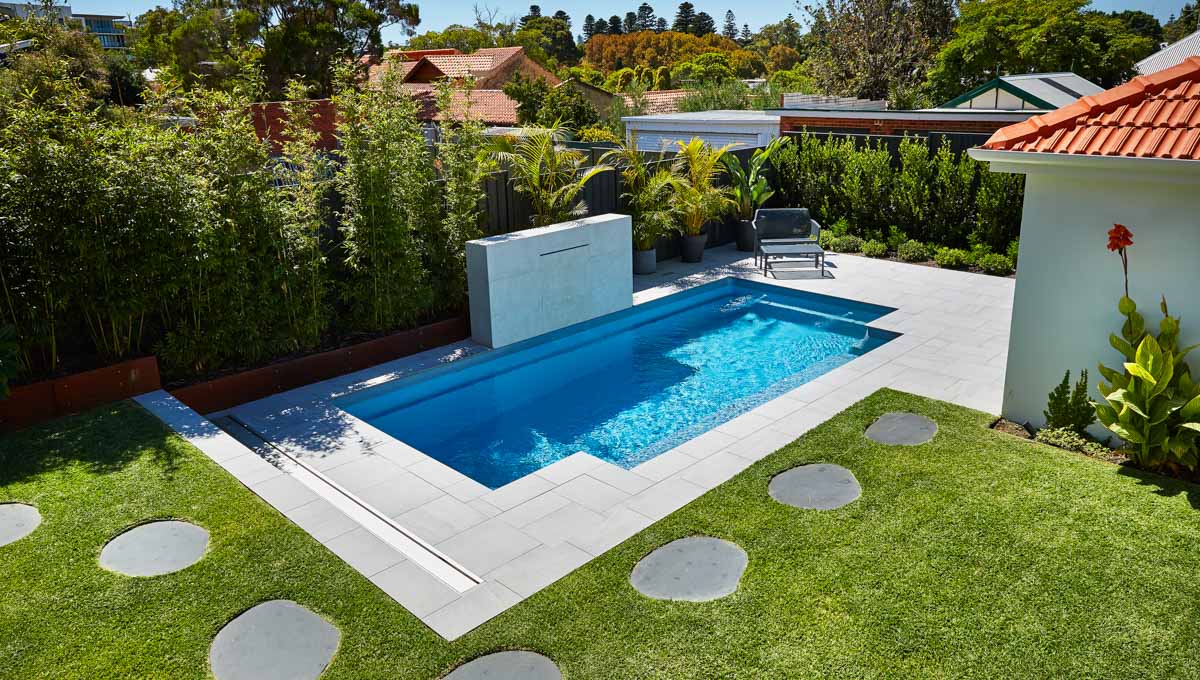
Choose low-stain paving — light-coloured, textured porcelain or concrete pavers are easy to hose down and don't show dirt between cleans. Avoid natural stone that stains or becomes slippery when wet.
-
Install a pool cover — a good cover keeps debris out, reduces evaporation, maintains water temperature, and significantly reduces chemical demand. Solar covers also help offset heating costs.
-
Position the pool away from large deciduous trees — this sounds obvious, but it's a detail often overlooked in the excitement of placing the pool. Autumn leaf fall into an uncovered pool is a significant seasonal workload.
-
Plan drainage carefully — poor drainage around the pool allows garden runoff to enter the water after rain, disrupting water chemistry. A good builder will assess this during your site consultation.
Talk to Melbourne's Dual-Build Experts
Sienna Pools is one of the few Melbourne builders offering both fibreglass and concrete pool construction under one roof. That means Steve and Patrick can give you honest, unbiased advice on which option suits your backyard, budget, and lifestyle — without trying to push you toward one product. Visit our building process page to understand exactly how we deliver, or contact us directly to book your free consultation.
Frequently Asked Questions
Ready to Design Your Low-Maintenance Pool?
The best time to make these decisions is before the build begins. Book a free consultation with Steve and Patrick and come with your questions — they'll walk you through pool type, shape, equipment, and surrounds options specific to your block and budget. Browse the full pool range to start forming your ideas.